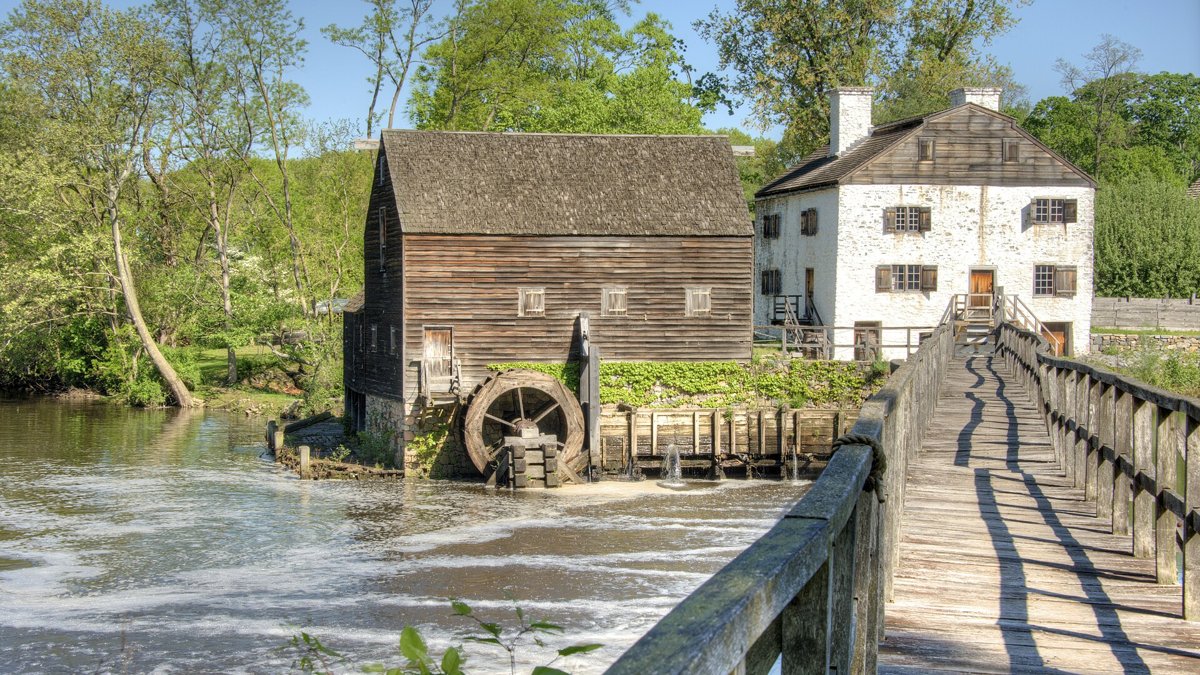
Twenty-Three People: Who Lived and Worked at Philipsburg Manor in 1750
A dead man's inventory listed the people before the silver. Here is what it tells us, and where you can still stand in the place it describes.
Photo: Bestbudbrian / Wikimedia Commons (CC BY-SA 3.0)
Most of us learned the story of the Hudson Valley as a story about farms, mills and landowners. Names on deeds. Big houses with good views. What we were rarely taught is who actually did the work, and that a great deal of it was done by people who were enslaved.
Philipsburg Manor in Sleepy Hollow is one of the few places in the North that tells that part out loud, and it does it with names. That's what makes it worth an afternoon, and it's what this post is about.
The inventory
Start with a piece of paper. When Adolph Philipse died, an inventory was taken of his estate. It lists 23 enslaved men, women and children who lived and worked at Philipsburg Manor in 1750. Read down the page and you notice the order. The people come first. After them come six pages of livestock, silver and other goods.
Think about what that means. A household of 23 human beings was written down the same way as a barn full of cattle, only earlier on the page. The boys listed range in age from 16 months to nine years old.
It's easy to read a sentence like that and move on. Don't. Slow down and sit with the 16-month-old for a second.
The mill, and the man who ran it
Here's where the place starts to feel real. The mill on the Pocantico River was the heart of the manor, and the miller was an enslaved man named Caesar. Milling is skilled work. You judge the grain, you tend the stones, you keep the wheel and the water doing what they're supposed to do. Caesar did that, and he trained an apprentice named Flip.
Inside the manor house, three other people ran a different business. Dina, Massey and Sue made butter in the cellar, and they made it commercially. So when you picture the manor in 1750, don't picture a quiet country house with a mill out back. Picture a working operation, run day to day by people whose names we know and whose lives were not their own.
What happened next
After Philipse's death, the community was taken apart. The records of the sales survive, and they're hard to read.
Sampson and Kaiser, who farmed 750 acres, were sold on March 10, 1750, to Lawrence Kortwright. Abigal was sold on March 22 to Adolph Myer. On April 19, Massy and her child were sold to Cornelius Van Horne, and on the very same day an eight-year-old named Sam was sold to Abraham DePeyster. Alone. Dina was sold on May 8 to Adrian Hoglandt.
That's a few paragraphs of dates and buyers. Behind each line is a family, or what used to be one.
Why it still matters here
You might wonder why a story from 1750 belongs in a newsletter about this week. Honestly, because it's been hiding in plain sight. The Philipse family held the Manor of Philipsburg under a grant from the English crown in 1693, and their land shaped the towns we live in now, from Yonkers up through Hastings and Sleepy Hollow. The land was confiscated and sold in 1785, but the lives that worked it didn't make the history books the way the landowners did.
Historian Ana Lucia Araujo of Howard University calls Philipsburg Manor "an important heritage site of slavery," and she points to what she calls a "troubling absence of public awareness about slavery in the northern states." That absence is exactly what a visit can start to fix.
Going to see it
Philipsburg Manor is open Monday, Wednesday and Thursday through October 29, so this week that means Monday the 19th, Wednesday the 21st and Thursday the 22nd. You visit on a guided tour led by costumed educators. It runs about an hour and 45 minutes and takes you through the mill, the manor house, the activity center and the barn.
Tickets are $18 for adults, $15 for seniors and young adults, and $13 for children. Kids under 3 and members are free, and buying ahead saves $2. It's run by Historic Hudson Valley at hudsonvalley.org.
Go for the mill, the water and the old stone house, because they're beautiful. But stay for the names. Caesar, Flip, Dina, Massey, Sue, Sam. In a valley that's so good at remembering its landowners, there's something right about standing in the one place that insists on remembering them too.
Get the Weekly Newsletter
Local events, jobs, and community news, every Thursday morning.
Free. No spam. Unsubscribe any time.