The Doctor Who Photographed Starlight: Henry Draper's Observatory in Hastings-on-Hudson
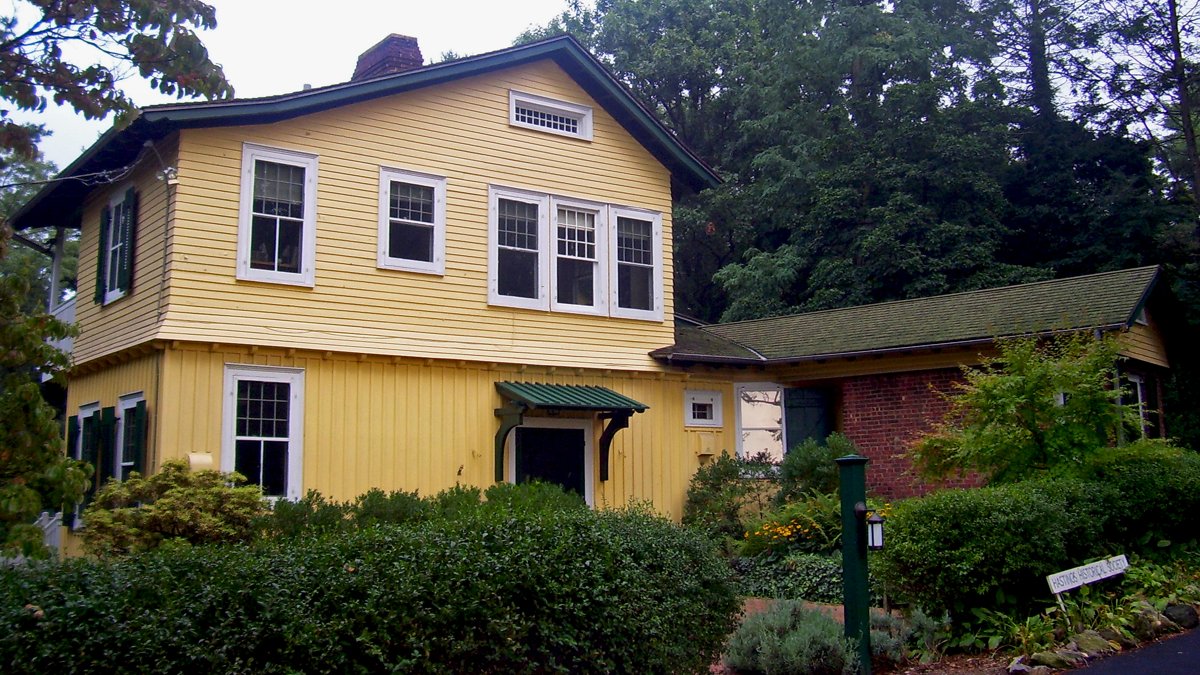
Photo: Daniel Case / Wikimedia Commons (CC BY-SA 3.0)
On the night of November 15, 1882, Henry Draper hosted a dinner for the National Academy of Sciences at his home in Hastings-on-Hudson, and he lit the table with electric lamps. They were Edison's, and they ran off a dynamo Draper had built in his own laboratory. It was a showpiece for a room full of the country's best scientists. He took a chill at that table. Five days later, in the early hours of Monday, November 20, he was dead at 45.
Today is the 144th anniversary. It isn't a round number, and that's fine. Some people deserve remembering on an ordinary year.
A hill, a dome, and a doctor with a day job
Draper was not an astronomer by trade. He was a physician, and from 1866 until he died he was a professor and the dean of the medical faculty at what is now NYU. The stars were what he did with the rest of his time.
His father, John William Draper, had moved the family to Hastings in the 1840s. In the spring of 1860, Henry built an observatory on the family's land, on a hilltop about 225 feet above the river, with part of the foundation cut out of solid granite. He added a photographic laboratory in 1862 and a second dome in 1869, a project he shared with his wife, Mary Anna Palmer Draper, who worked alongside him.
He ground the mirror for his own telescope. Think about that for a second. A man with a full teaching load was polishing glass so he could take better pictures of things millions of miles away.
The picture that mattered
In May 1872, Draper captured his first spectrum of a fixed star. It was Vega. On August 8 of that year he got a much better one, showing four lines very clearly. A spectrum is starlight spread into a band, and the dark lines in it tell you what the star is made of. Nobody had photographed one before.
That is the whole reason his name is still on things. A photograph does what an eye at the eyepiece can't. It holds still, it can be measured, and it can be shared. Eight years later, in September 1880, he exposed a plate on the Orion Nebula for 50 minutes and got an image of it.
In 1878 he led a party to Rawlins, Wyoming, to watch a total solar eclipse. Mary Anna came along, and so did Thomas Edison. Four years later, Edison's lamps were on his dinner table.
Two Drapers, one year
Here is the part that makes the story harder to shake. Henry's father, the man who brought the family to Hastings, was the first person to photograph the Moon. He died on January 4, 1882. Henry followed him in November of the same year.
It's a quiet sort of tragedy. Henry died just as he was about to give up medicine and do astronomy full time. He never got the chance.
Mary Anna Palmer Draper kept the work going. In 1886 she gave money to Harvard for observatory work in her husband's memory.
What is left
The big dome burned in 1905. In 1912 the building was remodeled as a residence and renamed the Observatory Cottage. Draper's niece, the astronomer Antonia Maury, lived there from 1935 to 1952. The village took it over in 1990, and the Hastings Historical Society has made its home there since 1994.
The domes are gone, so don't go expecting to see a telescope. What you will find is a yellow house on a hill in Draper Park, a Historical Society that knows exactly what happened there, and the same ground the observatory stood on.
Go see it
The Observatory Cottage is at 407 Broadway in Hastings-on-Hudson. It's open Mondays and Thursdays from 11am to 2pm all year, and on the first Saturday of the month from 2pm to 4pm, September through June. This week that means Monday, November 23. It's closed on Thanksgiving, and the next first-Saturday opening is December 5. You can call ahead at 914-478-2249. There's parking in the lot beside the yellow building, off Broadway south of Washington Avenue. Draper Park itself is open to walk any day.
One more thing. The full moon falls on Tuesday morning. Go out on Monday or Tuesday evening and look at it. Henry's father was the first person to photograph it, and the son went on to photograph the stars.
What's the last thing you looked at long enough to wonder how anyone worked it out?
Get the Weekly Newsletter
Local events, jobs, and community news, every Thursday morning.
Free. No spam. Unsubscribe any time.