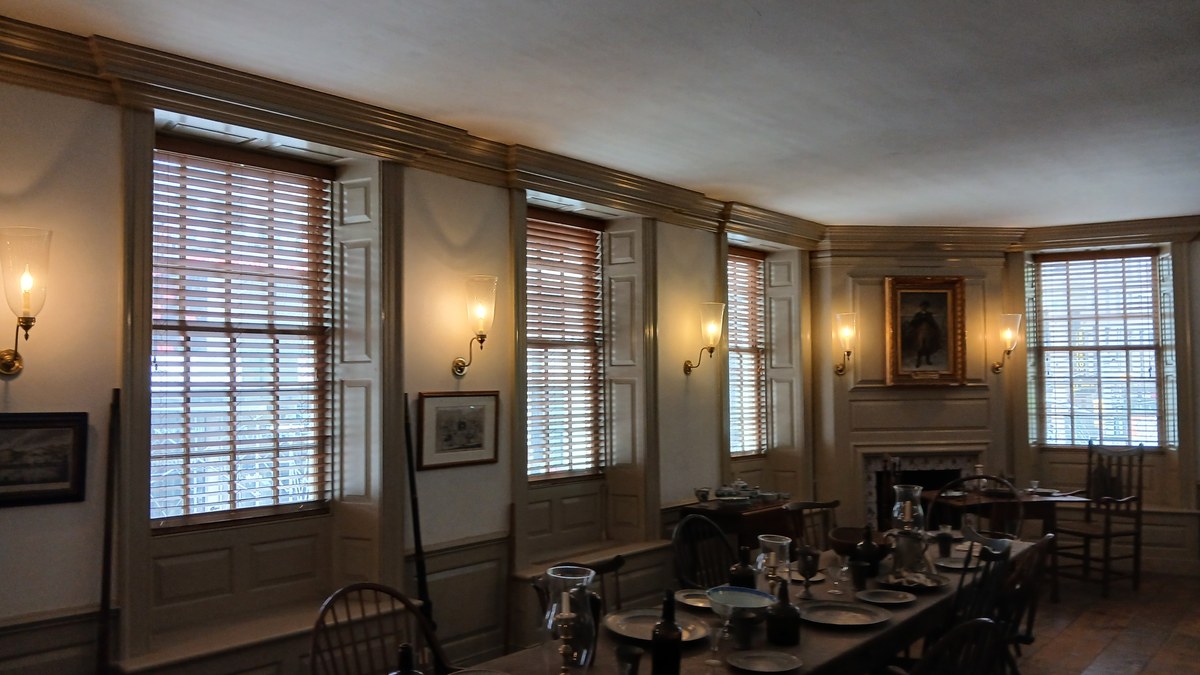
Evacuation Day, 1783: The Day the British Left New York and Washington Rode In
Photo: Epicgenius / Wikimedia Commons (CC BY-SA 4.0)
On Wednesday, November 25, 1783, a small American army walked into New York City and the last British soldiers walked out of it. It had taken seven years of occupation to get to that morning. For a long stretch of New York's history it was a bigger day than the Fourth of July, and a bit of it began right here on the river.
We think it deserves a few minutes of your attention, so pour something warm and settle in.
A deal made on the river
The war was effectively over by 1783, but the British were still sitting in New York City, and nobody had agreed on how they would leave. In the first week of May, George Washington went to find out. He made his headquarters at the DeWint House in Tappan, on the Rockland side of the Hudson, from May 4 to May 8, and Sir Guy Carleton, the British commander, came up the river from the city aboard a frigate called the Perseverance to meet him.
They met on May 6. Washington's letter to Carleton that day is dated "Orange Town," and it is a careful, formal document. He wanted two things in writing: how the British planned to evacuate their posts, and when. The mood was polite. One American officer described the talks as cordial, with Carleton dining with Washington on the first day and Washington dining aboard the Perseverance the next.
The politeness covered a hard disagreement. Many enslaved people had fled to the British lines during the war on the promise of freedom, and Washington's instructions from Congress covered preventing the carrying away of enslaved people and other American property. In his letter he wrote that he was "surprised to hear" that a ship carrying a large number of them had already sailed. Carleton held that the people who had come to the British under that promise were free to go. The two men left the question to their governments, and the British went on to evacuate roughly 3,000 African Americans and others to Nova Scotia, according to the National Archives. It is the part of the story that school lessons tend to skip, and it belongs in it.
Waiting out the summer
The summer and fall went to paperwork and patience. The Treaty of Paris was finally signed on September 3. On November 19, Carleton sent word that British troops would pull back from King's Bridge and McGowan's Pass on the 21st, and that the main evacuation of the city would happen at noon on the 25th.
The American army that was going to receive the city had spent its last winters in the Hudson Highlands, with Washington's headquarters up at Newburgh. On November 21, with the first British pullback done, Washington moved the roughly 800 infantry and cavalry that remained down to the village of Harlem, and waited for the date to come around.
November 25
It was a cold, clear morning. General Henry Knox led the American column down into the city behind a troop of dragoons, light infantry and a few artillery pieces, about 800 soldiers in all. Washington rode in with Governor George Clinton at the head of the main procession. The line of march came down the Bowery, turned onto Chatham Street, followed Queen Street, which we call Pearl Street today, then went up Wall Street and onto Broadway.
There is one story from that day that every account seems to include, and it is too good to leave out. As they left, the British had nailed a Union Jack to the flagpole at Fort George, removed the rope that would have lowered it and greased the pole. A young sergeant named John Van Arsdale wasn't going to let that stand. He found a hardware store, bought cleats, and climbed the pole by nailing them in as he went, until he could tear the British flag down and put up an American one.
The dinner
That evening Governor Clinton hosted a public dinner at Samuel Fraunces's tavern on Pearl Street, with Washington as the guest of honor and more than 100 other guests. They drank thirteen formal toasts, to the United States, to the allied nations, to the army, to the memory of the fallen and to liberty and union. There were fireworks and bonfires that night, and the celebrating went on for the better part of a week.
Nine days later, on December 4, Washington gathered about thirty of his officers in the Long Room at that same tavern and said goodbye. The sentence everyone remembers is "With a heart full of love and gratitude I now take leave of you." Fraunces Tavern is still there, and the Sons of the Revolution still hold an Evacuation Day dinner at its museum every year, with speakers who take the thirteen toasts one at a time.
A holiday that faded
For most of the nineteenth century, New Yorkers marked November 25 with parades, fireworks and military displays. Before Thanksgiving became the settled national holiday, this was the November holiday, and one account says the celebrations rivaled the Fourth of July. The last organized public celebration was in 1916. After that the holiday faded, as the generation that remembered it passed on and the First World War made it awkward to cheer an ally's old defeat.
What is left now is that dinner downtown and a little local memory. We like knowing where the date comes from, though. The river we live beside is the place where the whole thing was negotiated, and the people who made it happen had walked, camped and sailed up and down this valley for years first.
The next time you cross the Hudson, you could think about that May conference on the far shore, two generals in a Dutch farmhouse trying to decide how an army would leave.
What is a date you think New York should have kept?
Get the Weekly Newsletter
Local events, jobs, and community news, every Thursday morning.
Free. No spam. Unsubscribe any time.