She Freed Herself: The Hudson Valley's Own Juneteenth History
Juneteenth is about June 19, 1865, the day word of freedom finally reached the last enslaved people in Texas, two and a half years after the Emancipation Proclamation had already been signed. Two and a half years. Sit with that for a second. Freedom was already the law, and it still took that long to reach the people it was supposed to protect. That gap, between what the law says and what actually happens to the people it's supposed to protect, is the whole story I want to tell you today. And it happened right here, closer than you'd think, decades before Texas.
Let me tell you about a woman named Isabella.
She was born enslaved around 1797, in Ulster County, just up the river from where I'm sitting to write this. When she was nine years old, she was sold away from her parents. Actually sold, along with a flock of sheep, like she was livestock herself. Read that twice if you need to. It happened to a nine year old, a few dozen miles from where you're reading this right now.
She was sold again a few years later, this time to a man named John Dumont, out in West Park. She stayed enslaved to him for sixteen years. Sixteen years is a long time to wait on a promise, and Dumont did make her one: he told her he'd free her early, ahead of what New York law required. Then, near the end, he changed his mind.
So she left anyway. Late in 1826, without permission, without a plan beyond getting out, she walked off Dumont's property with her infant daughter Sophia in her arms and she freed herself. Nobody gave that to her. She took it.
Here's the part that gets me every time I read it. She wasn't finished. Dumont had illegally sold her son Peter south, to Alabama, which was against New York law even then. Most people in her position would have counted their losses and kept moving. She didn't. In March of 1828, she walked into the Ulster County Courthouse and filed a petition demanding the court order her son returned to her. And she won. The judge ruled that Peter belonged with his mother, no other master, no other keeper. She became the first African American woman on record to sue a white man in a United States court and win.
That's not the end of her story, obviously. A few years later she renamed herself Sojourner Truth and spent the rest of her life traveling the country, preaching, organizing, speaking at abolitionist and women's rights gatherings, becoming one of the most important voices this country has ever produced on either subject. But the part I keep coming back to is Kingston. A courthouse, twenty miles from here, in 1828, decades before anyone in Texas heard the word free.
Now let me tell you the other half of this, the part I think about every time I drive past Sleepy Hollow.
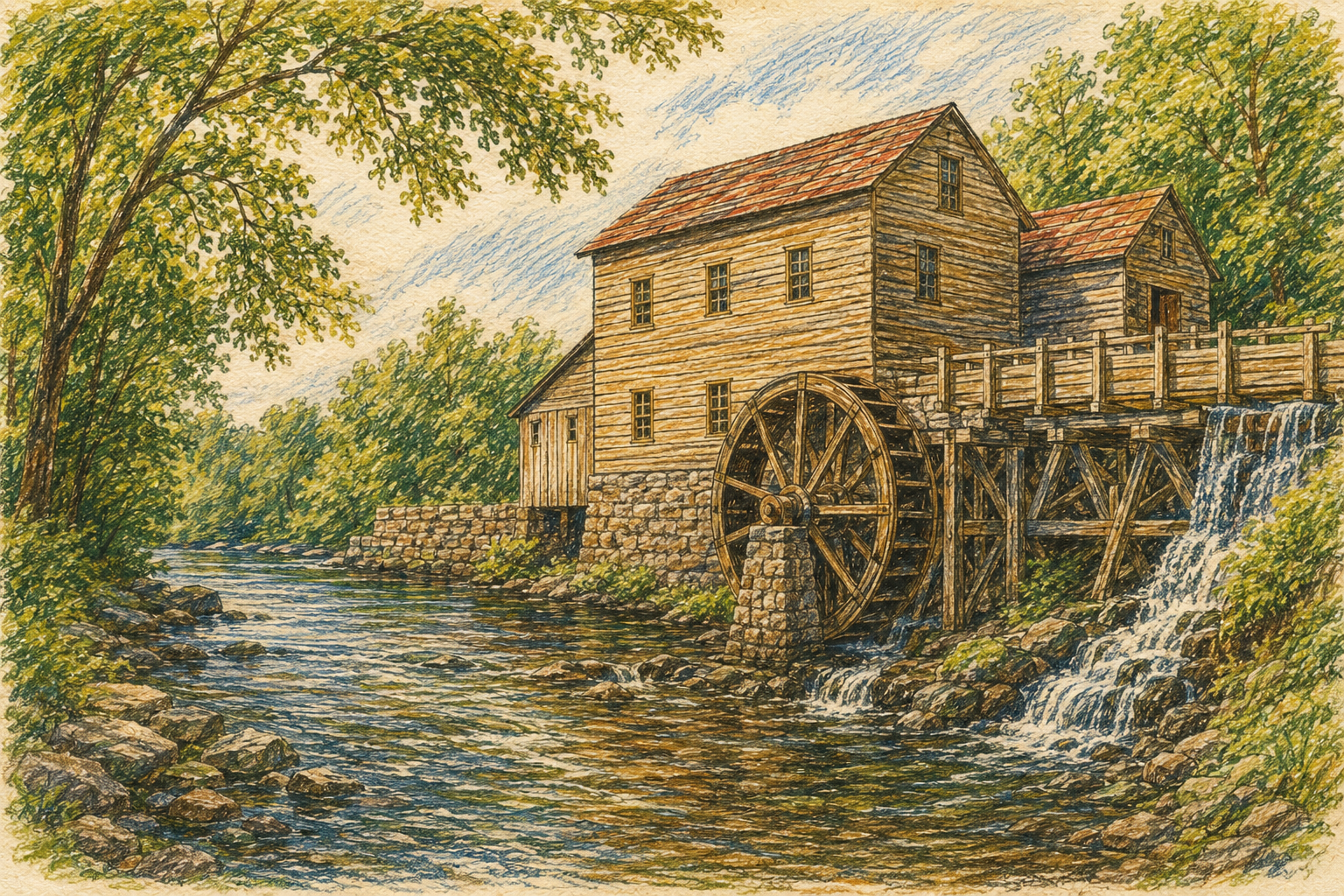
Philipsburg Manor sits right off Route 9, a working grist mill and farm turned into a museum you can walk through today. For most of its life as a historic site, the story told there was mostly about the Philipse family, the wealthy Loyalists who owned it. What usually got left out was that the place ran on the labor of 23 enslaved people. Not a number in a textbook. Twenty-three actual people, with actual names and actual jobs and actual lives that got taken from them.
In 2019, Historic Hudson Valley finally did something about that. They built a documentary project called People Not Property around the property's 1750 probate inventory, the document that literally listed those 23 people as assets alongside the livestock and tools. A man named Caesar is listed first, which researchers believe means he was considered the most valuable person there, likely because he ran the mill itself, one of the hardest and most skilled jobs on the whole property. Sam, Venture, and Massey show up on the same list. The women there ran the dairy and made the butter that helped fund the whole operation, and one of them, a woman named Abigal, was sold away to a buyer in New York City in March of 1750, torn from whatever family and community she'd built at the manor. Those aren't background details anymore. Historic Hudson Valley tells their story at the site now, on purpose, instead of the Philipse family's.
And here's where the two stories meet, in a way I think about a lot. New York didn't actually finish ending slavery until 1827. The law started in 1799, got extended in 1817, and it still took until 1827 for the very last enslaved people in this state to legally be free. Nearly thirty years of gradual, which in practice meant real people staying enslaved for decades after the state supposedly started freeing them. The man who wrote that original 1799 law was John Jay, the first Chief Justice of the United States, who lived twenty minutes from Philipsburg Manor at what's now the John Jay Homestead in Katonah. Jay owned enslaved people himself the entire time he was writing that legislation. Both of those facts are true about the same man, and the homestead's own tours don't hide the contradiction anymore. They go straight at it.
Isabella didn't wait for Jay's law to run its course. She left a year before it would have freed her anyway. And the researchers who finally put Caesar's and Abigal's names back where they belonged didn't wait for permission either.
If any of this makes you want to go see it instead of just reading about it, all three places are open right now. Philipsburg Manor in Sleepy Hollow and the John Jay Homestead in Katonah both run tours through the season. The Ulster County Courthouse where Isabella won her son back is still standing in Kingston, about an hour north of here. None of it is roped off or hard to find. Juneteenth is as good a reason as any to go stand where this actually happened.